



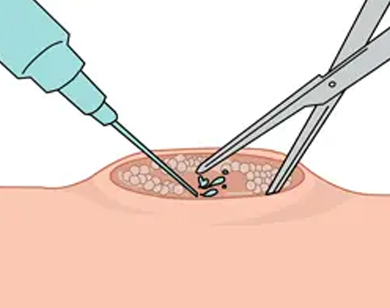
Incision & Drainage of Abscess
An abscess is a localized collection of pus caused by infection. It can occur in the skin, soft tissues, or deeper structures and may lead to severe pain, swelling, redness, and fever. Incision and drainage is the most effective treatment to remove the infected material and promote healing.
Symptoms & Causes
Common Symptoms of an Abscess
- Painful swelling with redness and warmth
- Localized tenderness
- Pus discharge or fluctuant swelling
- Fever or general discomfort
- Restricted movement if located near joints
Causes & Risk Factors
- Bacterial infections
- Minor cuts or skin injuries
- Poor hygiene or blocked glands
- Diabetes or lowered immunity
- Delayed treatment of skin infections
Treatment
Abscesses usually do not resolve with medications alone. Surgical drainage is required to remove the pus and control the infection effectively.
Common Treatment Options Include:
- Incision and drainage under local or general anesthesia
- Complete evacuation of pus
- Proper wound cleaning and dressing
- Antibiotic therapy when indicated
Timely incision and drainage reduce pain, prevent spread of infection, and promote faster recovery.
Prevention
Proper skin care and early treatment of infections can help prevent abscess formation.
- Maintain good personal hygiene
- Seek early medical care for painful swellings
- Avoid squeezing or puncturing boils
- Control blood sugar levels in diabetic patients
- Follow wound care instructions carefully